Artificial intelligence has transformed radiology reads, clinical documentation, revenue cycle management, and population health analytics. The one major clinical workflow it hasn't fully touched — until recently — is the referral decision: the moment when a primary care physician decides which specialist a patient should see.
That gap is closing quickly. In 2026, AI-driven referral management platforms are moving from early adopter to mainstream — and organizations deploying them are reporting outcomes not achievable with manual workflows: 92% in-network referral rates, 38% reductions in cost per referral, and 64% reductions in time to scheduled appointment.
What "AI Referral Management" Actually Means
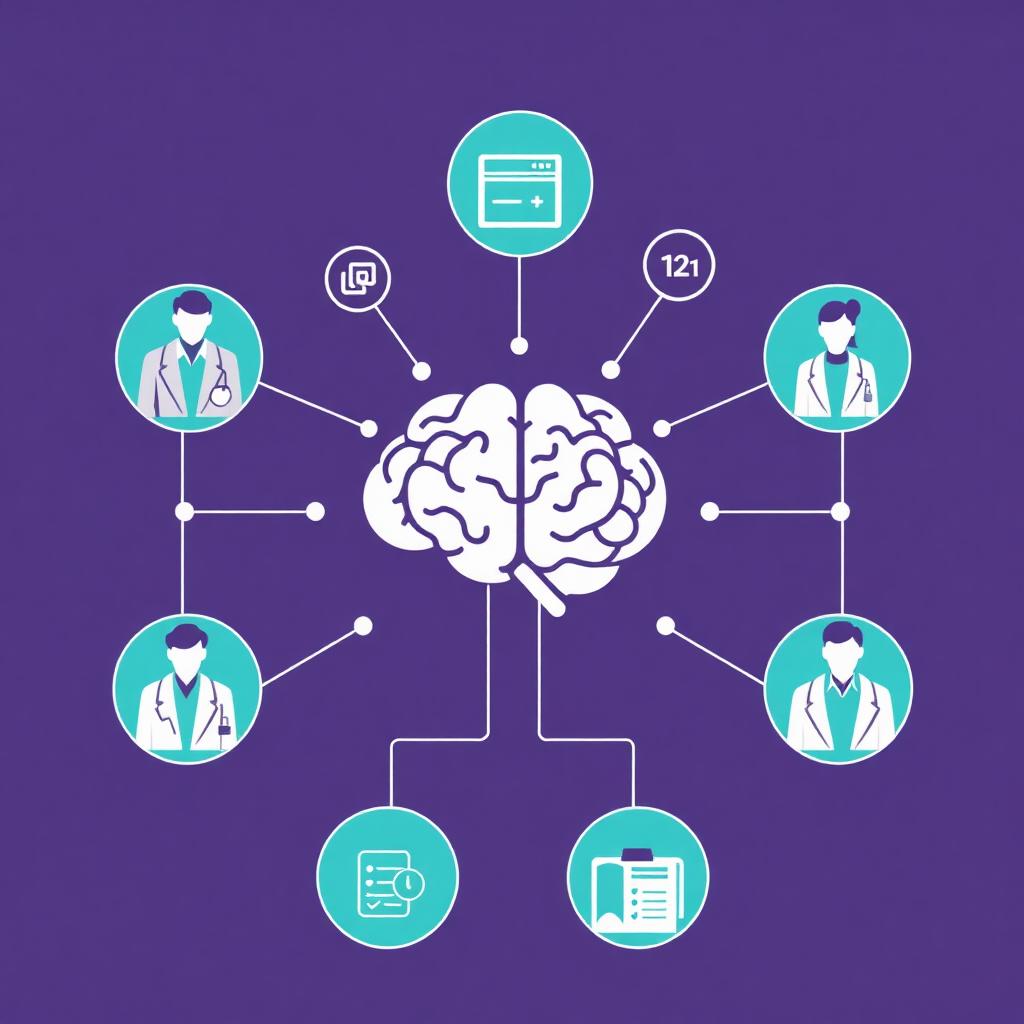
AI referral management is not a single technology — it's a stack of machine learning applications applied to different parts of the referral workflow.
Claims-native specialist scoring. ML models trained on historical claims data rank specialists by total cost of care per episode, quality outcomes, and referral responsiveness — adjusted for diagnosis, insurance, and location. Coordinators are shown the objectively best specialist for each patient, not just whoever is directory-listed.
Real-time insurance eligibility AI. Rather than querying static provider directories, AI queries live payer eligibility APIs at the moment of referral to confirm the specialist accepts the patient's specific plan and product. Insurance-related referral failures drop to near zero.
Prior authorization prediction and automation. ML models trained on payer approval/denial history predict outcomes and auto-populate supporting documentation. Cycle time drops from days to hours; denial rates fall.
AI scheduling (SARA). Natural-language and workflow AI reaches out to the patient via text with scheduling options, confirms the appointment with the specialist's system, and notifies both parties — without coordinator involvement. Time-to-appointment drops from 7 days to 1 day.
Closed-loop anomaly detection. AI monitors referral status across EHR systems and flags referrals that haven't closed within expected timeframes — triggering automated follow-up.
AI Referrals and the EHR: Integration, Not Replacement
A common concern is workflow disruption. Best-in-class platforms eliminate this by integrating natively with existing EHR workflows. ReferralPoint's Auto IdealMATCH pushes specialist recommendations directly into the "Refer To" field of the referral order in Epic, athena, eCW, and 20+ other EHRs — via API, with zero additional clicks required. The coordinator sees the AI recommendation already populated; they can accept it or override it. Prior auth submits in the background. The loop closes automatically.
The Future of AI in Healthcare Referrals
- Predictive referral need identification — flagging patients likely to need a specialist before the PCP visit
- Dynamic network optimization — continuously reweighting preferred specialist tiers on real-time data
- SDoH routing — matching specialists to the patient's specific situation
- Multi-modal closed loop — confirming visit completion in near real-time
- Generative AI referral summaries — auto-generating structured clinical summaries from PCP notes
Frequently Asked Questions
Q: What is AI-driven referral management in healthcare? A: AI-driven referral management uses machine learning models trained on claims data, EHR data, and payer data to automate and optimize referral decisions. It includes AI specialist scoring, real-time insurance verification, automated prior authorization, AI scheduling, and closed-loop monitoring — all integrated into the physician's existing EHR workflow.
Q: How does AI improve specialist selection? A: AI replaces coordinator familiarity and directory lookups with claims-native scoring across nine dimensions: condition-specific expertise, network preference, insurance verification, availability, cost, quality outcomes, loop-closing compliance, proximity, and language/SDoH match. The result is every referral going to the optimal provider — not the most familiar one.
Q: Is AI-driven prior authorization safe and accurate? A: Yes, when implemented correctly. AI PA systems are trained on millions of historical prior auth decisions from specific payers — making them highly accurate at predicting approval likelihood and pre-populating the clinical documentation most likely to drive approval. Human clinical oversight remains in the workflow; AI automates the submission and follow-up, not the clinical decision.
Q: What data does AI referral management use? A: The most effective AI referral platforms use claims data (actual utilization and cost), EHR clinical data (diagnosis codes, patient history), payer eligibility APIs (real-time insurance status), and demographic data (geography, language, SDoH). Platforms built on claims data produce significantly more accurate recommendations than those built on directory or survey data alone.