
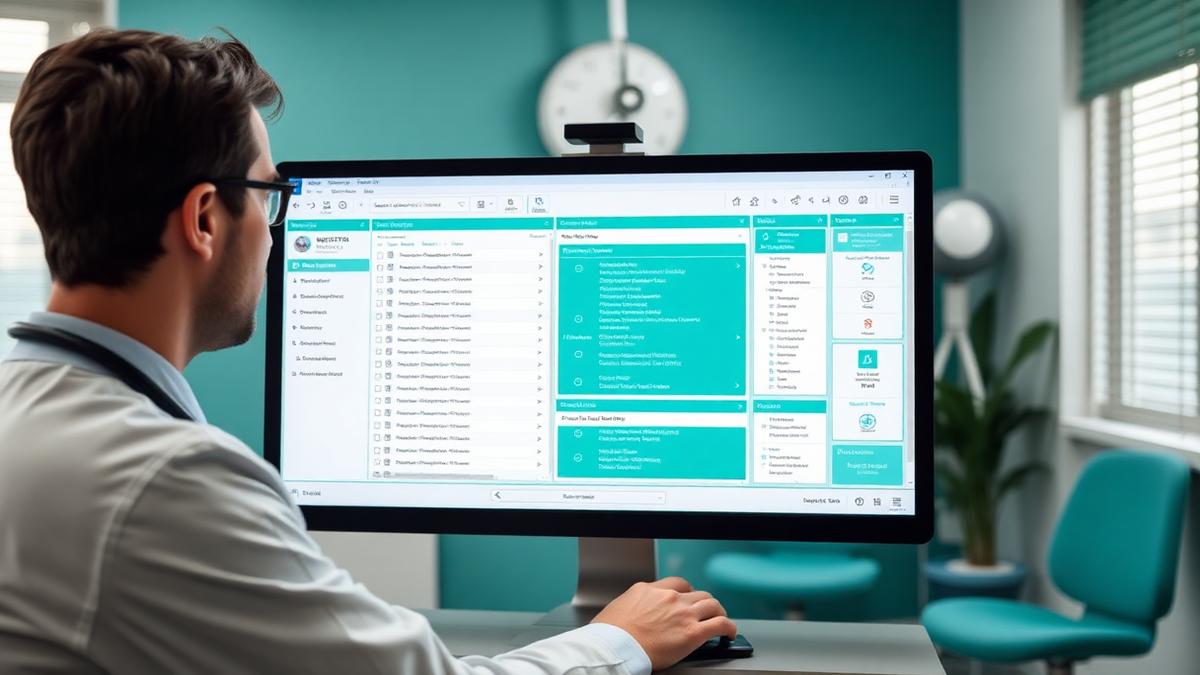
Standalone referral management tools that live outside the EHR require a separate login, a separate workflow, and manual data re-entry — which is exactly where adoption and data quality break down. EHR-embedded referral management keeps specialist matching, prior authorization, and closed-loop tracking inside the workflow clinicians already use, which is why native integration consistently outperforms bolt-on point solutions on both adoption and leakage reduction.
The Problem With Referral Point Solutions
A point solution is a tool built to solve one narrow problem — referral routing — without deep integration into the systems clinicians use every day. On paper they look appealing: focused features, faster setup, lower sticker price. In practice they fail for three predictable reasons.
- They require a second login and a second workflow. Every additional system a referring provider has to open is friction, and friction drives staff back to fax machines and phone calls — the exact behavior that causes leakage.
- They do not share data bidirectionally with the EHR. Referral status, diagnosis, procedure, and cost data must be re-entered into the chart manually, which is slow, error-prone, and frequently skipped.
- They create a second source of truth. When referral data lives elsewhere, care teams cannot see a patient's referral history from inside the chart, undermining both coordination and reporting.
Why Native Integration Performs Better
Referral management embedded inside the EHR keeps the entire lifecycle in one workflow:
- Specialist matching happens at order entry, using claims data on cost, quality, and network status, without the provider leaving the chart. See Auto IdealMATCH.
- Prior authorization is auto-submitted from the referral, rather than requiring staff to re-key clinical details into a payer portal.
- The loop closes automatically. Diagnosis, procedure, and cost data from the completed visit flow back into the EHR for both outbound and inbound referrals, creating one continuous record instead of two disconnected ones.
- Adoption is higher, because staff work in the system they already know rather than learning a parallel tool.
What to Look For in an Integrated Platform
- Breadth of EHR and practice management compatibility. Does it work across the systems your organization actually runs, including smaller and regional EHRs — not only the largest vendors?
- Bidirectional data flow, not one-way routing. The outcome must return to the chart, not just the order go out.
- Native prior authorization submission, aligned with the FHIR-based standards required under CMS-0057-F.
- Claims-based matching logic, so recommendations are grounded in real cost and quality data rather than static directories. Directory-driven failure modes are covered in provider directory accuracy and failed referrals.
- HIPAA-compliant architecture with access governance and PHI protection built into the integration itself. Evaluation criteria are in HIPAA compliance in AI referral platforms.
The Data Cost of Poor Integration
Analysis of more than 6 million referral transactions found that 68% of leaked referrals originate from integration failures at intake — before the referral ever reached a human decision point at the specialist's office. That is a direct argument for integration depth: the earlier a referral can fail, the more leakage is an integration problem rather than a scheduling or patient-behavior problem. See what is referral leakage in healthcare.
Key Takeaways
- Every extra login is a new opportunity for a referral to fall out of the workflow.
- Bidirectional data flow, not routing, is the test of real integration.
- Most leakage originates at intake, which is where integration depth matters most.
- Multi-EHR organizations need vendor-neutral integration breadth, not a single-vendor tie.
- Compliance architecture should be evaluated with integration, not after it.
Frequently Asked Questions
Q: Is EHR-integrated referral management more expensive than a standalone tool? A: Not necessarily. Total cost of ownership often favors integration once you account for staff time lost to duplicate data entry and revenue lost to leakage caused by workflow friction in standalone tools.
Q: Which EHRs support integrated referral management? A: ReferralPoint integrates across major EHR and practice management systems including athena, Epic, Altera, NextGen, eCW, Cerner, and Meditech, with additional systems available depending on workflow requirements.
Q: Does EHR integration slow down implementation? A: It can require more upfront technical setup than a standalone tool, but that investment typically pays off in adoption rates and data quality that point solutions struggle to match long term.
Q: Can a health system running multiple EHRs still use an integrated referral platform? A: Yes, provided the platform is built to integrate across multiple EHR and practice management systems rather than being tied to one vendor — common in systems that have grown through acquisition.
To see referral matching and authorization inside your own EHR workflow, request a walkthrough.