
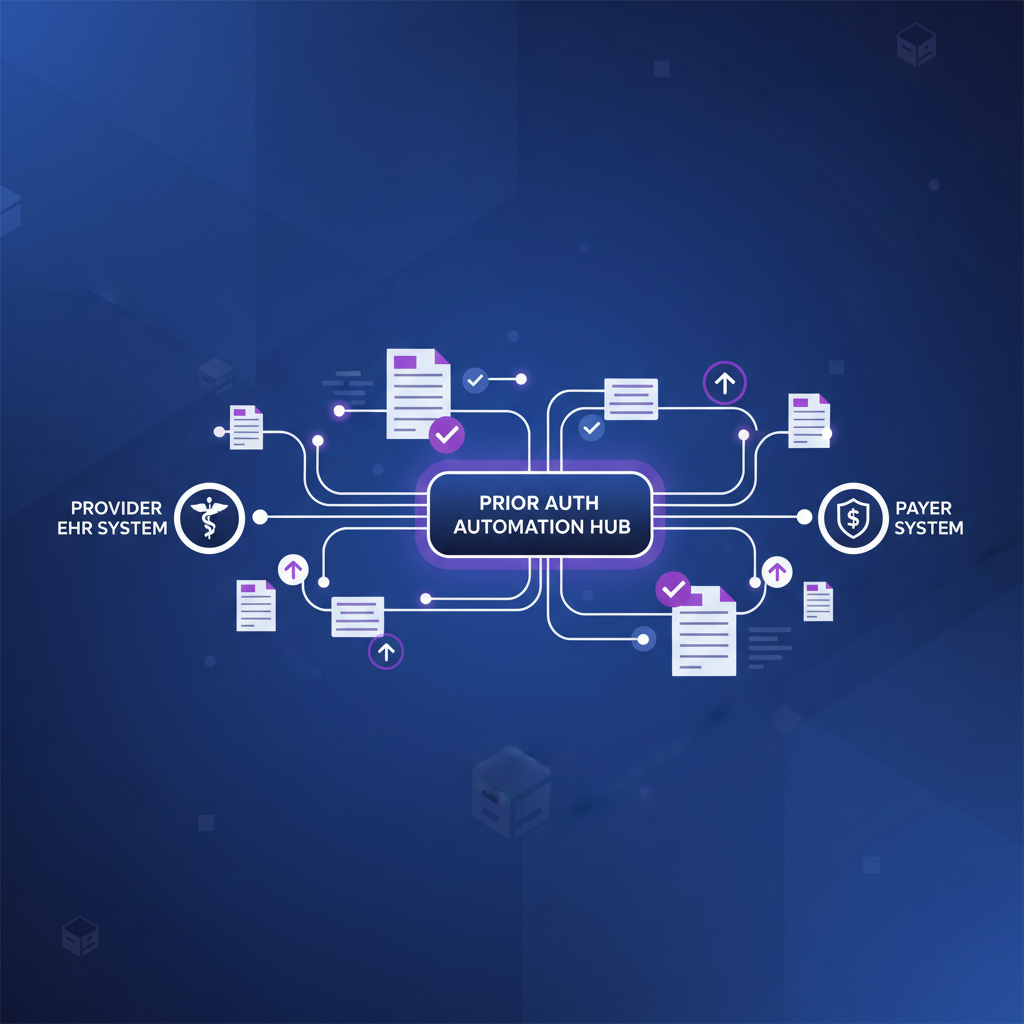
Prior authorization automation inside an EHR works by connecting payer criteria, patient clinical data, and submission workflows directly within the system where care is ordered — eliminating the need for staff to leave their primary workspace to initiate, track, or follow up on authorization requests. When a provider places a referral or orders a procedure, the system automatically identifies whether prior auth is required, pulls the relevant clinical documentation, submits to the payer electronically, and surfaces the status in real time. What used to take 10–14 days of phone tag and fax cycles can be reduced to hours.
The Traditional Prior Auth Problem
The conventional prior authorization process is genuinely broken. A provider orders a specialist referral or imaging study. A referral coordinator — or the provider themselves — must determine whether that service requires authorization from the patient's payer. They leave the EHR, log into a payer portal, complete a web form, attach clinical documentation, and wait. Then they call to follow up. Then they fax additional records. Then they wait again.
The American Medical Association has documented that physicians and their staff spend an average of 14 hours per week on prior authorization tasks. Authorization delays are the leading reason patients abandon referrals before completing them. And denials — often due to incomplete or incorrectly submitted documentation — create rework that compounds the bottleneck.
What Changes With EHR-Native Automation
Rules Engine at the Point of Order
When prior auth is embedded in the EHR, a rules engine checks authorization requirements the moment a referral or procedure is ordered. Staff are immediately alerted if auth is needed — no separate lookup, no portal switch.
Automated Payer Connectivity
Modern prior auth platforms connect directly to payer APIs (or clearinghouses where APIs aren't available), submitting requests electronically with the clinical data already present in the chart. This eliminates manual data re-entry and the documentation errors that trigger denials.
Real-Time Status Tracking
Instead of calling a payer to check on a pending authorization, staff see status updates — pending, approved, denied, additional info requested — inside the EHR. When a payer requests additional clinical documentation, the system surfaces the request and routes it to the appropriate team member.
Intelligent Clinical Documentation Attachment
Automated systems can identify which clinical data elements a specific payer requires for a specific procedure and attach them automatically from the patient's chart. This dramatically reduces the rate of denials due to incomplete submissions.
Denial Management Workflows
When a denial is received, EHR-native platforms can initiate an appeal workflow, pre-populate the appeal with the original submission data, and route it for provider review — all without leaving the EHR.
Why EHR-Native Matters vs. Bolt-On Tools
Standalone prior auth tools — those accessed via a separate portal or desktop application — solve part of the problem but create their own friction. Staff still have to context-switch. Data entered in the authorization platform doesn't automatically populate back to the EHR. Training burden is higher because staff must master two systems.
EHR-native automation keeps everything in one place. The clinical data is already there. The workflow is familiar. Adoption is higher because the tool is where staff already spend their day.
ReferralPoint's Auto PriorAUTH™ module is built on this principle — it lives inside your EHR environment, not alongside it. Authorization requests, status tracking, and denial management all happen within the same interface used to place the referral, document the visit, and coordinate follow-up care.
The Downstream Impact
Faster authorizations mean fewer referral abandonments. Fewer denials mean less rework and lower administrative cost. And when prior auth is handled automatically at the time of referral, patients are more likely to complete the care their provider ordered — which matters for outcomes, quality scores, and value-based contract performance.
For health systems and medical groups facing the volume and complexity of modern payer authorization requirements, EHR-native automation isn't a nice-to-have. It's the infrastructure that makes referral completion possible at scale.
Frequently Asked Questions
Q: What is prior authorization automation? A: Prior authorization automation uses software to identify when a service requires payer approval, submit the authorization request electronically using clinical data already in the patient's record, and track approval status — reducing or eliminating manual phone calls, faxes, and portal submissions.
Q: How does EHR-native prior auth automation differ from standalone tools? A: EHR-native tools operate inside the EHR where clinical staff already work, eliminating the need to switch between systems. Standalone tools require a separate login and manual data transfer, which increases training burden and reduces adoption.
Q: How long does prior authorization take with automation? A: With electronic submission and real-time payer connectivity, many authorizations that previously took 10–14 days can be resolved in 24–72 hours. Urgent or complex cases may still require manual follow-up, but automation handles the majority of routine requests.
Q: What causes prior authorization denials, and can automation reduce them? A: Most denials result from incomplete clinical documentation, incorrect procedure coding, or submission to the wrong payer pathway. Automation reduces denials by attaching the correct documentation automatically and validating submissions before they're sent.