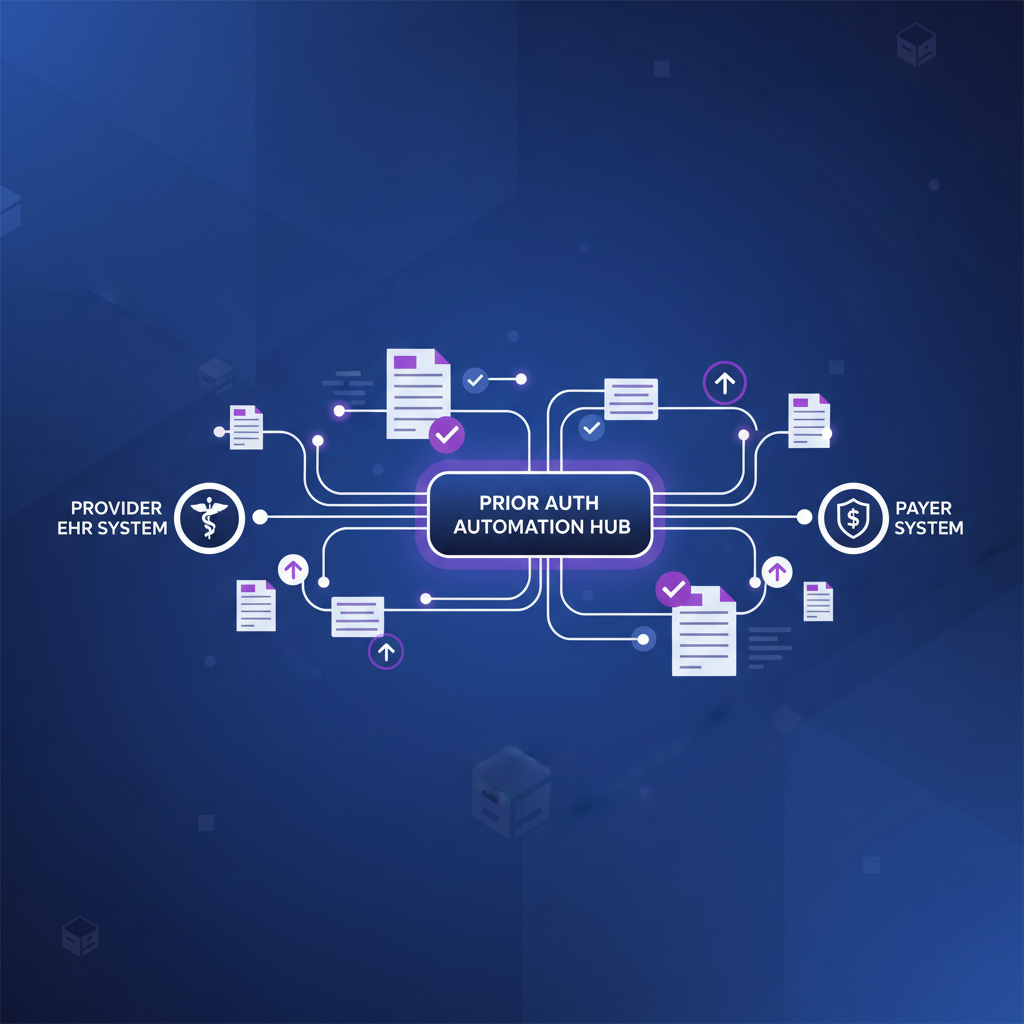

Prior authorization has become one of the most damaging friction points in American healthcare — and the data in 2026 is unambiguous about the toll it takes. According to the American Medical Association, physicians now handle an average of 43 prior authorization requests per week. That's approximately 12 staff hours per week that could be spent on patient care — per physician. Multiply that across a 50-provider medical group and you're looking at 600 hours of clinical capacity lost every week to paperwork.
The consequences aren't just operational. A 2025 systematic review in the American Journal of Medicine found that prior authorization delays are associated with reduced clinical effectiveness and compromised patient outcomes. Nearly one in four physicians reported that prior auth had led to a serious adverse event for a patient — including hospitalization, permanent impairment, or death. And 93% of surveyed physicians said prior auth delays patient care.
In the context of value-based care and in-network referral management, prior authorization is particularly destructive. Every day of authorization delay is a day the patient might seek care elsewhere — out of network, out of your attribution, out of your shared savings calculation.
Why the Current System Is Structurally Broken
Prior authorization was designed as a utilization management tool — a check on unnecessary care. In theory, it's a reasonable idea. In practice, it has evolved into an administrative burden that delays appropriate care far more often than it prevents inappropriate care.
The core problem is that most prior authorization systems require manual submission, manual follow-up, and manual tracking — and they're entirely disconnected from the referral workflow that triggered the need for authorization in the first place. A coordinator places a referral, then separately initiates a prior auth request through a payer portal, then manually tracks approval, then calls the patient, then informs the specialist. Each handoff is a potential failure point.
For value-based care organizations, this fragmentation is especially costly. A prior auth delay of 5-7 days is a 5-7 day window during which an anxious patient might call another specialist, get an appointment, and receive care entirely outside your network. The leakage risk is highest precisely when the patient is waiting.
The 2026 Reform Landscape: Progress and Gaps
The policy environment around prior authorization is shifting. In June 2025, major insurance industry leaders signed a voluntary pledge to reduce prior authorization burden — including commitments to standardize electronic prior auth submissions and reduce the volume of services subject to PA requirements. CMS has also issued rules requiring payers to respond to PA requests within 72 hours for urgent cases.
But policy reform moves slowly, and the administrative burden remains enormous in 2026. The organizations reducing their prior auth burden most dramatically aren't waiting for payers to reform — they're using AI to automate the process on their side of the equation.
How AI-Automated Prior Authorization Works
The key insight in AI-driven prior authorization is that most PA decisions are predictable. For a given payer, a given procedure, and a given diagnosis code, the probability of approval or denial can be estimated with high accuracy from historical claims data. AI systems trained on those patterns can:
- Pre-populate authorization requests with the clinical data most likely to drive approval
- Submit electronically to payer systems without manual data entry
- Flag high-probability denials before submission so clinicians can build the appeal proactively
- Track approval status and notify care coordinators in real time — eliminating manual follow-up
- Feed approval and denial data back into the referral recommendation engine to route future referrals toward lower-auth-burden providers
ReferralPoint's automated prior authorization module does all of this — and critically, it operates inside the referral workflow. When a coordinator places a referral through ReferralPoint, prior auth submission is triggered automatically. There is no separate portal, no second screen, no manual data re-entry. The authorization happens in the background while the coordinator moves on to the next patient.
The Downstream Benefits for Value-Based Care
Automated prior authorization doesn't just save administrative time — it has measurable downstream effects on VBC program performance:
- Faster access to in-network care: When authorization is instant or near-instant, patients don't have time to defect to out-of-network providers while waiting. In-network rates improve directly.
- Better patient experience: KFF surveys consistently show that prior authorization creates more patient frustration than any other aspect of navigating the health system. Eliminating the wait improves satisfaction scores that affect Star ratings and VBC contract bonuses.
- Reduced physician burnout: 89% of physicians say prior auth contributes to burnout. Automating it is a retention tool as much as an efficiency tool — and in a tight physician labor market, that matters.
- Closed-loop integrity: When authorization is tracked automatically, the referral loop stays intact. The system knows whether the auth was approved, whether the appointment was scheduled, and whether the visit occurred — without requiring a human to check each step.
Frequently Asked Questions
Q: What is automated prior authorization in healthcare? A: Automated prior authorization uses AI and electronic data exchange to submit, track, and manage insurance authorization requests without manual data entry or phone calls. In the most advanced implementations, the authorization is triggered automatically when a referral is placed and submitted to the payer electronically — often returning a decision within hours rather than days.
Q: How does prior authorization affect value-based care outcomes? A: Prior authorization delays slow access to in-network care, creating a window during which patients may seek care out-of-network. This increases leakage, reduces shared savings, and prevents quality data capture. Research shows that nearly one in four physicians has experienced a prior auth-related serious adverse patient event, including hospitalization.
Q: Can AI predict prior authorization approvals? A: Yes. AI systems trained on historical claims data can predict with high accuracy whether a given prior auth request will be approved or denied by a specific payer. This enables pre-population of the strongest supporting clinical documentation and proactive appeal preparation — reducing denial rates and accelerating approvals.
Q: How does ReferralPoint automate prior authorization? A: ReferralPoint triggers prior authorization submission automatically when a referral is placed — inside the existing EHR workflow. There's no separate portal or manual re-entry. The system submits electronically, tracks approval status in real time, and notifies coordinators when authorization is granted. The result is a referral-to-authorization process that takes hours, not days.