
Ask a medical group director what their referral closed-loop rate is, and you're likely to get one of two responses: a blank stare, or a number they're not proud of. Closed-loop referral tracking — confirming that a specialist visit occurred and that clinical data returned to the referring PCP — is the orphan metric of value-based care. Organizations know they should track it. Most don't.
That's a problem, because closed-loop rate is arguably the single metric most predictive of VBC performance. An organization with a 90% closed-loop rate knows what happened to 90% of the patients it referred. It can measure quality gaps, identify high-cost specialist patterns, prevent readmissions, and demonstrate care continuity to payers. An organization with a 40% closed-loop rate is managing 60% of its referred population blindly — which means it's also managing its VBC contracts blindly.
What Is a Closed-Loop Referral?
A referral is closed when three things are confirmed:
- The patient attended the specialist appointment — not just that the appointment was scheduled, but that the visit actually occurred.
- The specialist generated clinical documentation — a visit note, procedure code, diagnosis update, or follow-up plan.
- That documentation returned to the referring PCP's EHR — in a format the PCP can read and act on, without manual retrieval.
An open loop, by contrast, is any referral where one or more of these confirmations is missing. Each failure mode is common — and each represents a care coordination breakdown with real clinical and financial consequences.
The Clinical Consequences of Open Loops
- Medication errors: A cardiologist changes a medication and the PCP keeps prescribing the original — leaving the patient on conflicting regimens.
- Duplicate testing: Without specialist imaging or labs, the PCP reorders the same test — adding cost and exposing the patient to unnecessary procedures.
- Missed follow-up: A 3-month follow-up recommendation never reaches the PCP. The condition progresses.
- Avoidable readmissions: Post-procedure care instructions don't transfer back. The patient is readmitted within 30 days — triggering a quality penalty.
- Quality gaps: HEDIS measures, Star ratings, and MSSP quality scores require specialist visit documentation in the PCP's record. Without closed loops, that documentation doesn't exist.
Why Closed-Loop Rate Is So Hard to Achieve
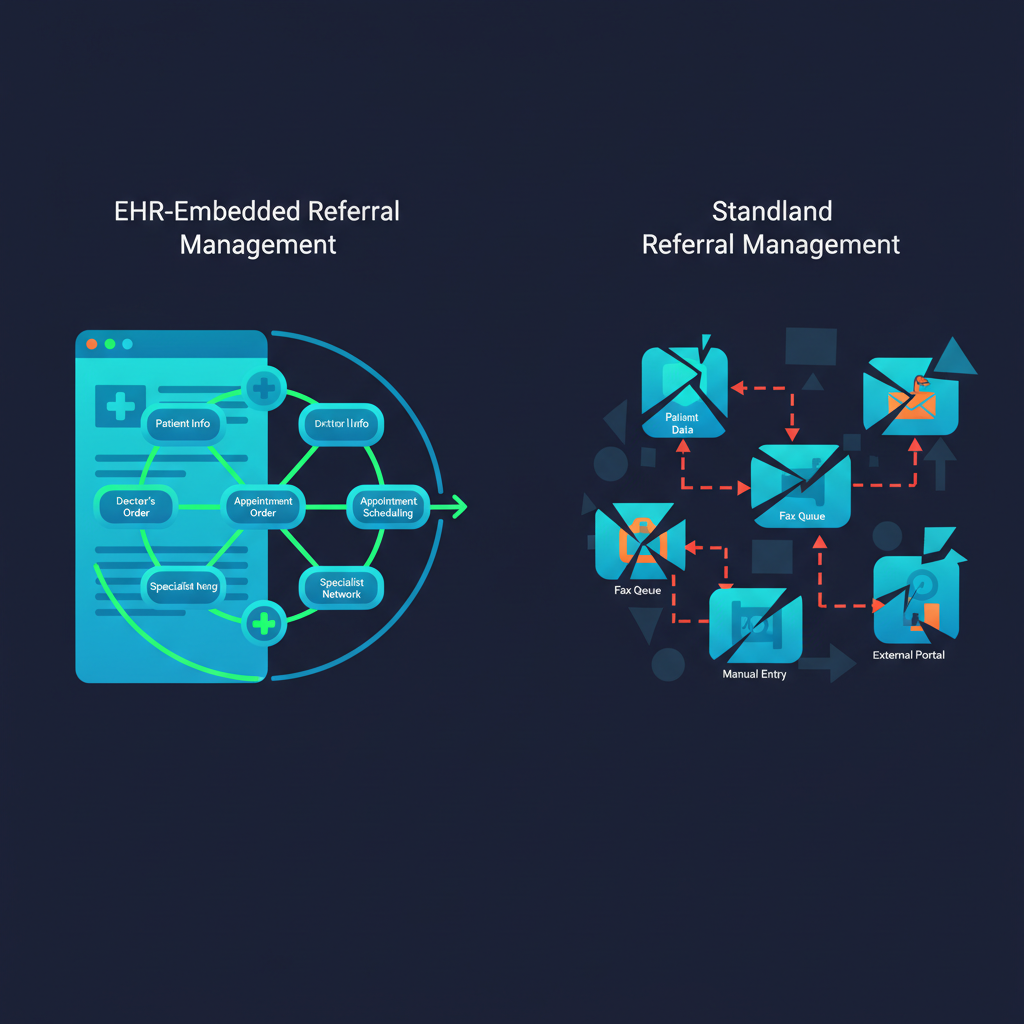
The fundamental challenge is that referral care happens across EHR boundaries. The PCP uses Epic. The cardiologist uses eClinicalWorks. The ortho group uses NextGen. There is no native mechanism for these systems to automatically share data back to the referring physician — especially when the specialist is outside the same health system or ACO.
Manual closed-loop tracking — coordinators calling specialists to confirm visits and request notes — is theoretically possible but practically unsustainable at volume. A practice placing 50 referrals a day cannot staff that. The only scalable path to 90%+ closed-loop rates is automation across EHR systems.
How ReferralPoint Achieves 100% Closed-Loop Tracking
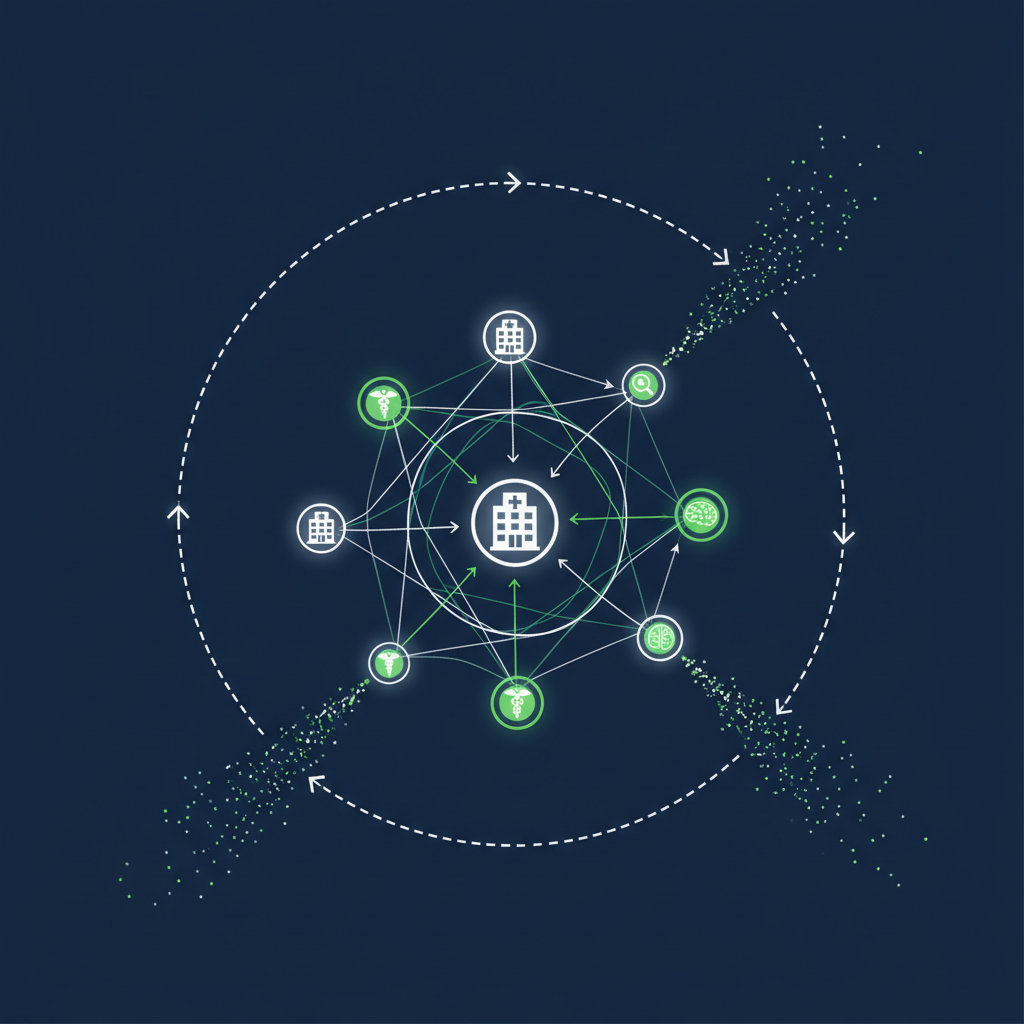
ReferralPoint tracks every referral from order to outcome — outbound and inbound — regardless of EHR environment. The platform combines Direct secure messaging, API integrations, HL7 feeds, and FHIR connections to monitor referral status and retrieve clinical data from specialist practices automatically.
For inbound workflows at specialty practices, the system closes the loop with the referring PCP after each visit. For outbound workflows at PCPs and medical groups, the platform tracks open referrals and escalates any that haven't closed within a defined timeframe.
Building a Closed-Loop Culture
- Specialist network agreements that include data-sharing obligations as a participation requirement
- PCP performance dashboards showing individual provider closed-loop rates alongside cost and quality
- CMO/CMIO quarterly reviews of closed-loop performance by specialty
- Patient education at the time of referral about why follow-up communication matters
Frequently Asked Questions
Q: What is a closed-loop referral in healthcare? A: A closed-loop referral is a referral in which the primary care physician confirms three things: the patient attended the specialist visit, the specialist generated clinical documentation, and that documentation was returned to the PCP's EHR. When any one is missing, the loop is open — creating care coordination risk and quality documentation gaps.
Q: What is a typical closed-loop rate for referrals? A: Most healthcare organizations operating on manual referral workflows achieve closed-loop rates below 50%. Organizations using dedicated referral management platforms like ReferralPoint typically achieve closed-loop rates of 90–95% or higher.
Q: How does closed-loop rate affect VBC quality scores? A: VBC quality measures including HEDIS, MSSP quality indicators, and Medicare Advantage Star ratings require documentation that recommended care happened. Without closed loops, the PCP lacks the specialist visit data needed to document compliance — resulting in lower quality scores and potentially reduced VBC contract payments.
Q: Can ReferralPoint track referrals across different EHR systems? A: Yes. ReferralPoint tracks referral status and retrieves clinical data across EHR boundaries using Direct secure messaging, API integrations, HL7 feeds, and FHIR connections — closing loops even when the PCP and specialist use different EHRs.