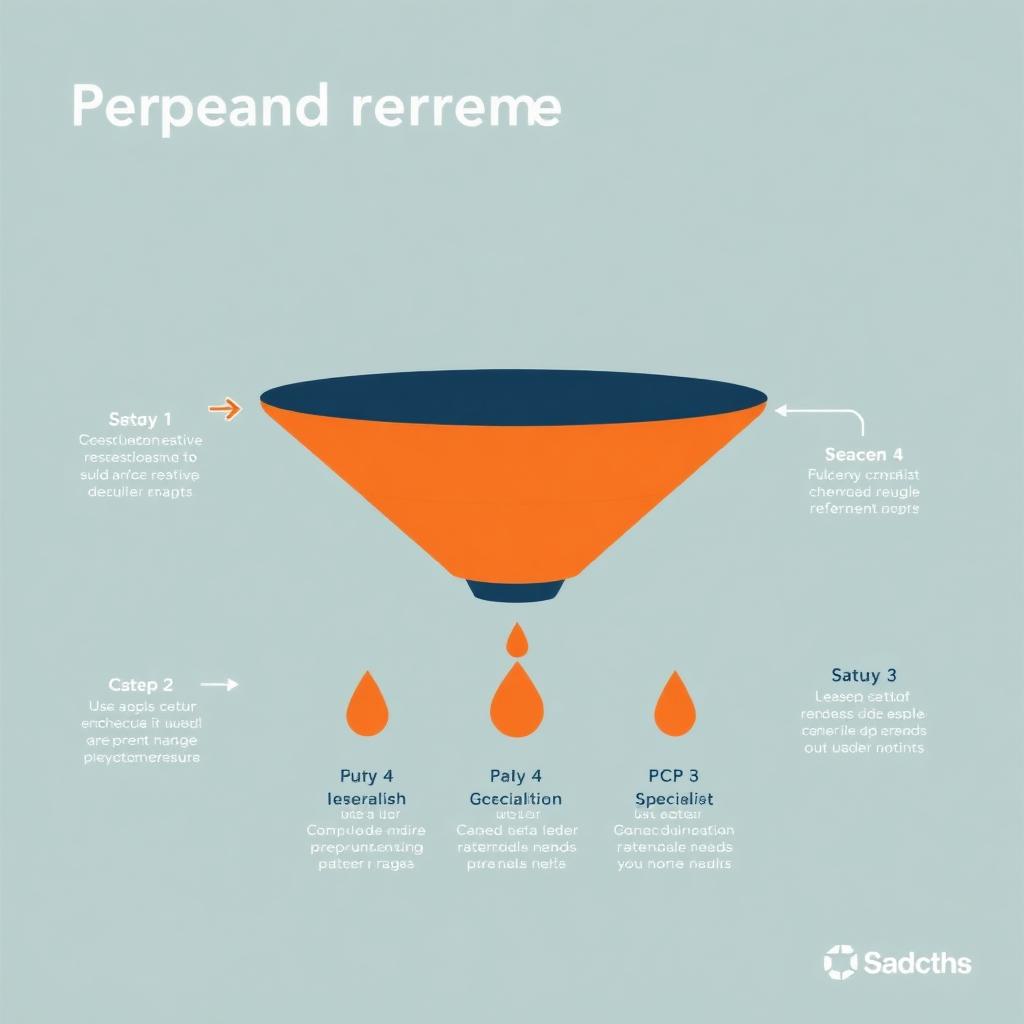

High-value specialist network tiering ranks providers using transparent, condition-specific evidence across quality, total cost, access, network participation, patient needs, and coordination performance. A useful tier is decision support — not a permanent label — and should include minimum data standards, clinical governance, patient choice, and a process for review and correction.
Why a single score can mislead
Specialist performance varies by condition, procedure, patient complexity, site of service, and available data. A clinician may be highly appropriate for one clinical question and not the right match for another. Ranking solely by average cost or a broad quality score can create false precision.
A tiering framework should start with the decision it supports. Is the organization choosing a cardiologist for heart-failure management, an orthopedic surgeon for a specific procedure, or a dermatologist for a rapid diagnostic question? The unit of analysis matters.
Use a balanced evidence model
Core domains can include condition-specific outcomes where reliable, total episode or longitudinal cost, avoidable utilization, access time, geographic and language fit, plan participation, patient experience, data completeness, and closed-loop communication. The weights should be documented and governed.
Minimum volume and data-quality thresholds are essential. When evidence is insufficient, the system should say so rather than assign a confident rank. Risk adjustment and peer-group comparison should be used where appropriate and explainable. Our network management approach treats data sufficiency as a first-class output, not a footnote.
Separate eligibility from preference
Before ranking, determine whether a destination meets non-negotiable requirements: relevant expertise, active licensure and credentialing, insurance participation, accessible location or modality, and ability to accept the referral. Ranking then compares suitable options rather than mixing unsuitable providers into the list.
Patient preferences can change the best match. Travel, language, continuity, accessibility, scheduling, and prior relationships may reasonably outweigh a small difference in modeled performance. Present options and tradeoffs transparently.
Govern and improve the network
Providers should have a mechanism to review their data and correct inaccuracies. Clinical and network leaders should monitor unintended effects, access changes, and disparities. Tiers should refresh on a defined cadence and respond to material changes in participation or capacity.
ReferralPoint's IdealMATCH approach can combine claims-native intelligence with insurance, quality, cost, location, patient preference, and closed-loop behavior. The objective is not to declare one universal winner; it is to identify the strongest appropriate option for this referral. Data handling and provenance are described under integration and security.
Key takeaways
- Rank within a condition-specific decision context.
- Use balanced domains and explicit data sufficiency rules.
- Filter for suitability before ranking options.
- Preserve patient choice and provider data-review pathways.
Frequently asked questions
Q: What is specialist network tiering? A: It is the grouping or ranking of specialist options using defined evidence to support referral, benefit, or network decisions.
Q: Should cost determine the highest-value tier? A: No. Cost should be considered alongside quality, outcomes, access, patient needs, and coordination.
Q: Why should ranking be condition-specific? A: The relevant expertise, outcomes, and cost patterns differ across conditions and procedures.
Q: How should low-volume providers be handled? A: Use data-sufficiency thresholds and identify uncertainty rather than assigning an overconfident score.
Q: Does tiering eliminate patient choice? A: It should not. Appropriate options and meaningful tradeoffs should be explained, and patient preference documented.
Q: How often should tiers be updated? A: On a defined cadence and whenever material changes occur in participation, capacity, quality data, or provider status.