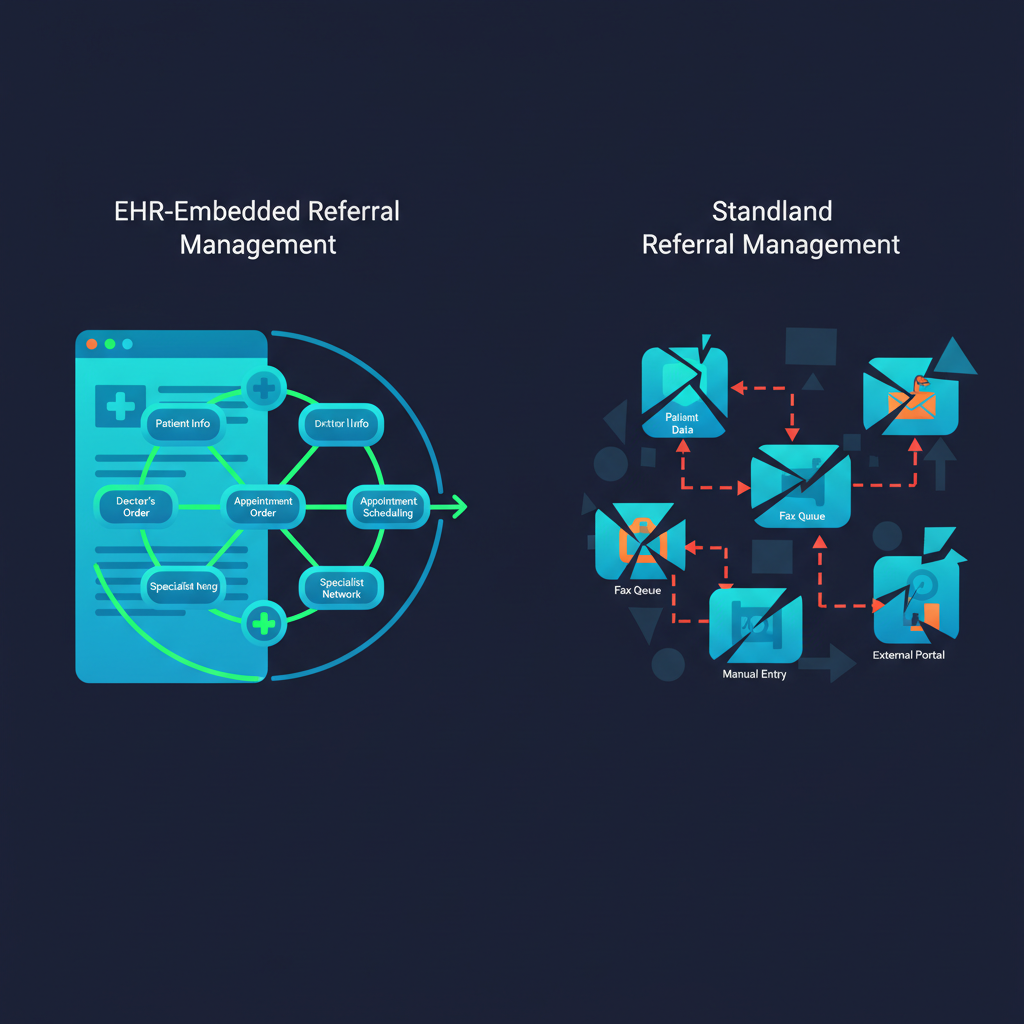

Specialty practices face a referral problem that rarely gets discussed: the inbound side. Every day, referrals arrive from dozens of primary care physicians via fax, Direct message, email, EHR notification, and phone call. Each represents a patient who needs care — and a referring PCP watching to see what happens next. When those referrals land in a manual queue and sit for days, two things happen: the patient seeks care elsewhere, and the PCP stops referring to your practice.
The math is unforgiving. Research shows 15% or more of scheduled patients can be recaptured through faster inbound processing. In a specialty practice doing 500 referrals a month, that's roughly 900 additional patients per year — slipping through a process gap that is entirely fixable.
And in a value-based care world where PCPs are being held accountable for where they refer, the practices that respond fastest, close the loop most reliably, and make referring easy will win the referral relationship.
The Inbound Referral Chaos Problem
The average specialty practice receives referrals through four to six different channels simultaneously — with no unified queue, no priority triage, no automatic chart creation, and no systematic way to confirm receipt back to the referring PCP. Processing time averages five to seven days from receipt to first scheduled appointment — long enough for most patients to get care somewhere else.
Why Inbound Speed Is a Competitive Advantage in 2026
PCPs under VBC pressure are actively evaluating their specialist referral relationships. A PCP who refers 200 patients a year and finds that Practice A responds within 24 hours and closes the loop within 48 hours — versus Practice B that takes a week to acknowledge receipt — will concentrate referral volume in Practice A. Speed and reliability are the differentiators.
The Five Channels Problem — and How to Unify Them
Modern specialty practices receive inbound referrals through:
- Fax (still the most common channel in U.S. healthcare)
- Direct secure messaging from EHR systems
- Email (often insecure and inconsistently monitored)
- Web referral forms submitted through practice portals
- Lab results and clinical notes forwarded by PCPs
ReferralPoint's inbound workflow consolidates all five channels into a single smart queue. Faxes are digitized and parsed automatically. Direct messages are ingested via EHR integration. Every referral is triaged, prioritized, and queued for action — with the patient chart auto-created in the practice's EHR and an acknowledgment automatically sent back to the referring PCP.
Auto Chart Creation: Eliminating the Manual Data Entry Tax
Manual chart creation can consume 20–30 minutes per referral. ReferralPoint eliminates this entirely — automatically parsing the clinical information, creating or updating the patient chart in the practice's EHR, linking referral documents, and initiating scheduling without a human touching the data.
Closing the Loop Back to Referring PCPs
ReferralPoint automatically closes the loop with the referring PCP after each specialist visit — regardless of what EHR the PCP uses — sending the clinical summary, procedure codes, and follow-up plan through the appropriate channel (Direct, fax, or EHR integration).
Frequently Asked Questions
Q: What is inbound referral management? A: Inbound referral management is the process by which a specialty practice receives, processes, and responds to referrals from primary care physicians and other referring providers. It includes capturing referrals from all incoming channels, triaging and prioritizing them, creating or updating patient charts, scheduling appointments, and closing the loop with the referring provider after the visit.
Q: How long should it take to process an inbound referral? A: Best-in-class specialty practices in 2026 process inbound referrals within 24 hours of receipt — from acknowledgment through to a scheduled appointment. ReferralPoint customers average a reduction from 7 days to 1 day, resulting in 15% or more additional scheduled patients who would otherwise have sought care elsewhere.
Q: How does ReferralPoint handle fax-based referrals? A: ReferralPoint digitizes incoming faxes, automatically parses the clinical and demographic information, and routes each referral into a unified smart queue. The patient chart is auto-created or updated in the practice's EHR without manual data entry, and an acknowledgment is sent back to the referring PCP within minutes.
Q: Why do specialty practices lose patients during inbound processing? A: Patients referred to a specialty practice will seek care elsewhere if they don't hear back quickly, if scheduling is difficult, or if they're anxious about their condition. A 5–7 day processing window — typical for manual workflows — is long enough for a patient to call another specialist and receive care out of network. Reducing that window to 24 hours dramatically increases the probability the patient actually shows up.